AI Resume Screening vs. Manual Shortlisting - Which is Better for Recruitment Teams?
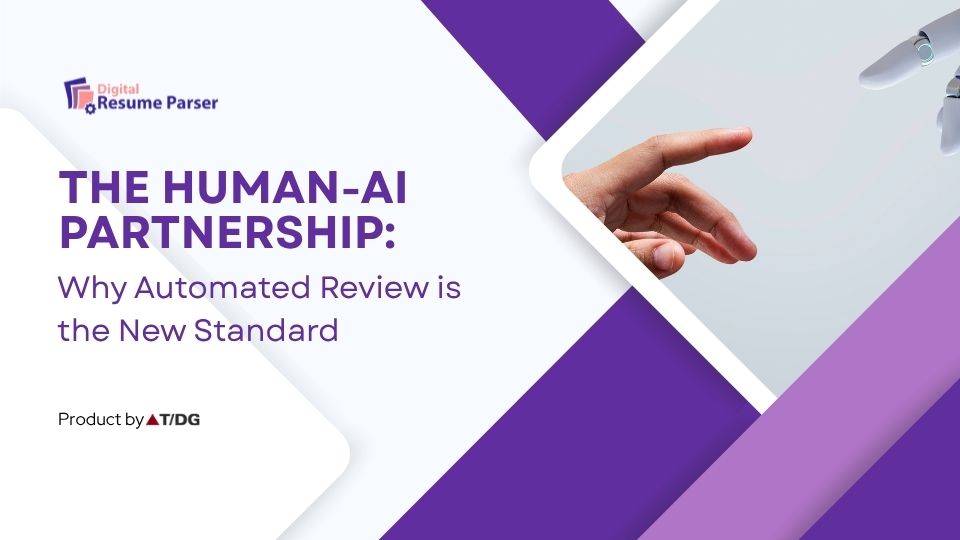
For decades, the "human touch" was considered the only way to evaluate a resume. However, as the volume of digital applications has exploded, that touch has become a bottleneck. When comparing AI resume screening to manual vs. automated resume review, the data shows that human intuition is often clouded by fatigue and bias.
The Comparative Breakdown
To understand the shift toward AI-driven recruitment, we must look at the three core pillars of candidate evaluation: scale, consistency, and depth of data.
- Scale and Throughput
The most immediate difference is pure velocity. A dedicated human recruiter can carefully review roughly 50 resumes per day before cognitive decline sets in. Beyond that point, the quality of review drops significantly.
In contrast, an advanced AI can process 50,000 resumes in minutes. For enterprise-level companies, this isn't just an "improvement"; it’s a total transformation of the hiring funnel. AI removes the "first-come, first-served" bias, ensuring that the 1,000th applicant receives the same level of scrutiny as the first.
- Accuracy and Consistency
Humans are subject to "decision fatigue." Studies show that we make different decisions based on the time of day, whether we’ve had lunch, or how many "bad" resumes we’ve seen in a row.
AI doesn't have "bad days." It applies the same rigorous, predefined standards to every single document. Whether it’s 9:00 AM on a Monday or 11:00 PM on a Friday, the logic remains identical. This consistency is the foundation of a fair hiring process, ensuring that qualified candidates aren't rejected simply because a recruiter was tired.
- Deep Data Extraction
Manual review is often a game of "keyword spotting." Humans scan for recognizable company names or job titles. However, AI extracts structured data that humans often overlook.
Advanced parsers can identify:
- Specific certification codes and their expiration dates.
- Subtle skill progressions (e.g., moving from a Junior Developer to a Lead Architect).
- Correlation between specific educational backgrounds and long-term employee retention.
- Nuanced linguistic patterns that indicate technical proficiency.
The Hybrid Approach: AI as a Force Multiplier
At Digital Resume Parser, we don't believe AI should replace humans; we believe it should empower them. By handling the high-volume "noise," AI allows humans to focus on the "signal"—the final interview and culture fit.
- Objective Filtering: One of the greatest challenges in manual recruitment is unconscious bias. Whether it's a candidate's name, their alma mater, or even the layout of their resume, humans often make snap judgments that have nothing to do with job performance.
AI provides a level playing field. By focusing strictly on skills, experience, and competencies, AI-driven filtering ensures that the most qualified people rise to the top, regardless of their background. This promotes diversity and ensures your talent pool is built on merit.
- Better Resource Allocation: Your recruitment team consists of high-level professionals whose time is expensive. Every hour a Senior Talent Acquisition Manager spends sorting through a pile of 500 entry-level resumes is an hour they aren't spent:
- Nurturing relationships with top-tier passive candidates.
- Conducting deep-dive cultural fit interviews.
- Developing long-term employer branding strategies.
By automating the "screening" phase, you allow your highest-paid talent to focus on high-value tasks, not data entry and sorting.
If your hiring team is currently buried under a mountain of PDFs and Word documents, it’s time to modernize. You can regain hours of your week, eliminate the stress of the "inbox zero" chase, and most importantly make better hiring decisions. In the debate of AI vs. human recruitment, the winner is the organization that uses both. AI handles the data, while humans handle the relationship.
Experience the power of the most accurate AI resume screening technology on the market. Get Started with Your Free Trial